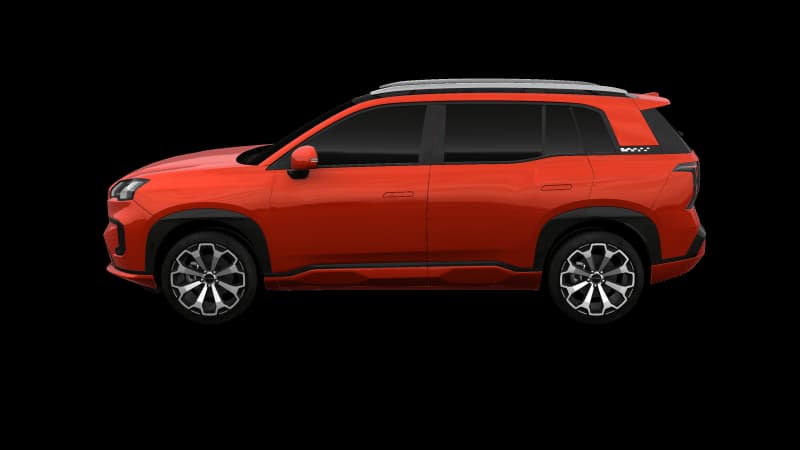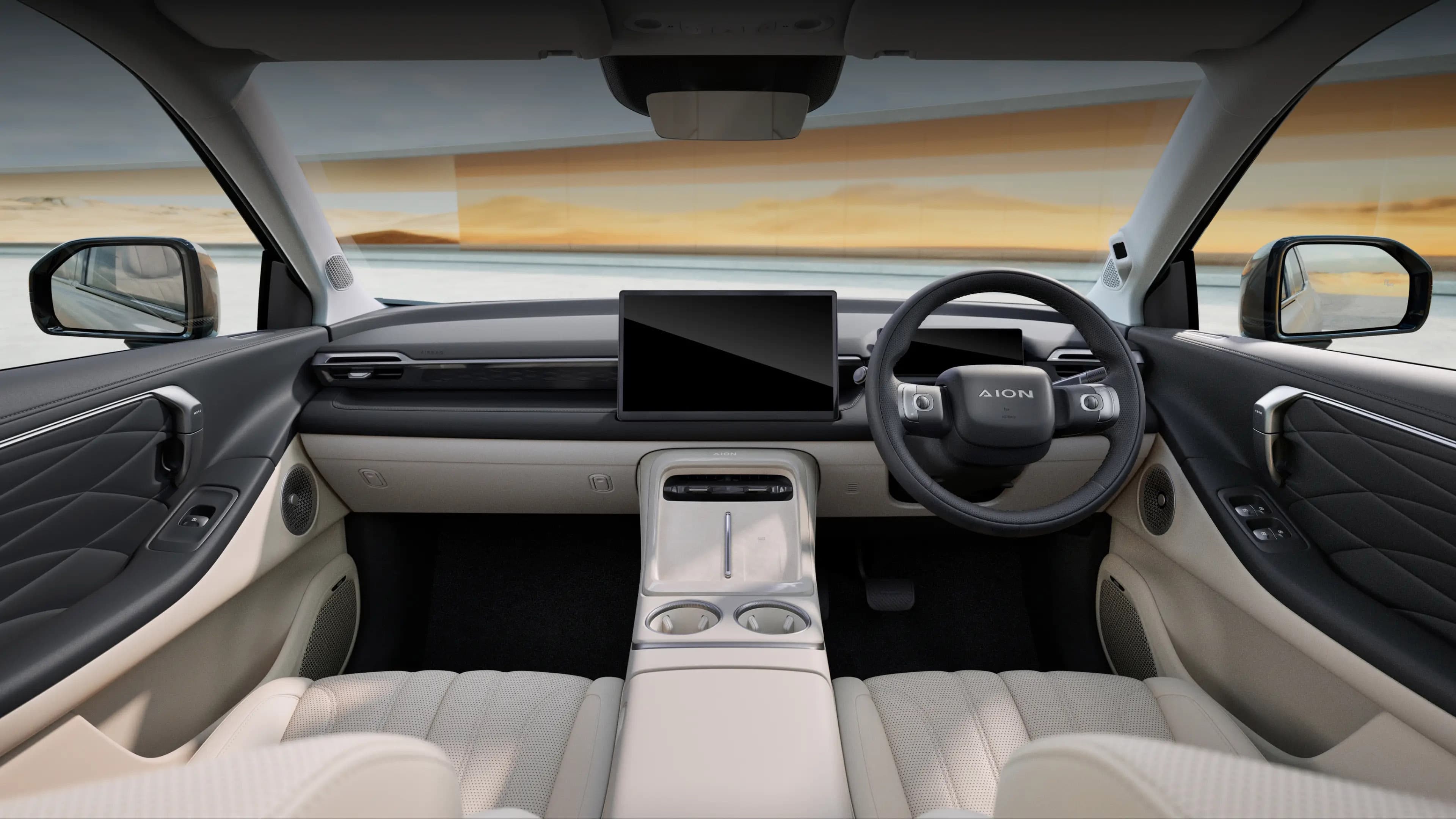
These three account for most of the AION volume we ship, and buyers regularly pick the wrong one because they compare them on range and price alone. Range and price are the two attributes that matter least once the cars are in service.
AION UT — the container filler
Compact hatchback, 4,270 mm long, 44.1 or 60 kWh LFP, 420 to 500 km CLTC. The shortest car of the three and the cheapest way into the range. Its real advantages are charging speed — 30% to 80% in under 24 minutes — and packaging, with a 2,750 mm wheelbase that is identical to the Y Plus despite the shorter body, and a boot that opens out to 1,600 litres with the seats flat.
Best where fuel is expensive, journeys are urban, and your customer is buying a second car or a first EV. Worst on poor road surfaces, where the short wheelbase and small wheels are felt.
AION Y Plus — the workhorse
Boxy crossover, 4,535 mm, 51.9 or 63.2 kWh, 430 to 520 km CLTC, 0.278 drag coefficient. The most cabin space per metre of any car in the range, which is exactly why it dominates ride-hail fleets in China. Upright seating, a flat floor and a genuine amount of rear legroom.
Best where the car will carry people for money — taxi, ride-hail, hotel shuttle, staff transport. Also the easiest of the three to sell to a family. The GEP 2.0 platform underneath it is the same one the ES uses, so parts commonality across a mixed fleet is good.
AION V — the one people want
Family SUV, 4,630 mm, 62 or 75.3 kWh, up to 650 km CLTC, 204 Ps. Longer range than the other two by a clear margin, a 5-star E-NCAP and ANCAP body, seven airbags, an integrated heat pump and the ADiGO 5.0 system on a Qualcomm SA8155P chip. It is the car in the line-up that feels expensive.
Best for private retail sale, for markets with long inter-city distances, and for hot climates where the heat pump earns its place. The premium over the Y Plus is real but so is the gap in perceived quality.
The four things that actually decide it
- Duty cycle — a car doing 300 km a day for hire is a different purchase from one doing 40 km a day for a family
- Road surface — wheelbase and wheel size matter more than power on bad roads
- Charging access — if there is no public DC network, on-board charger rating and wall box specification decide the ownership experience, not range
- Who resells it — fleet buyers care about parts and downtime; retail buyers care about how the cabin feels
Tell us the duty cycle and the market rather than the model, and we will tell you which of the three to quote. Mixed containers are accepted, so a trial order can carry more than one.